Tuesday 13 January 2026
There’s a homeless man in our congregation. He appears in and around the church from time to time. Mostly minding his own business. And sometimes prompting other people to mind theirs.
He’s scruffy, maybe 60, with a full beard and a long, complicated past.
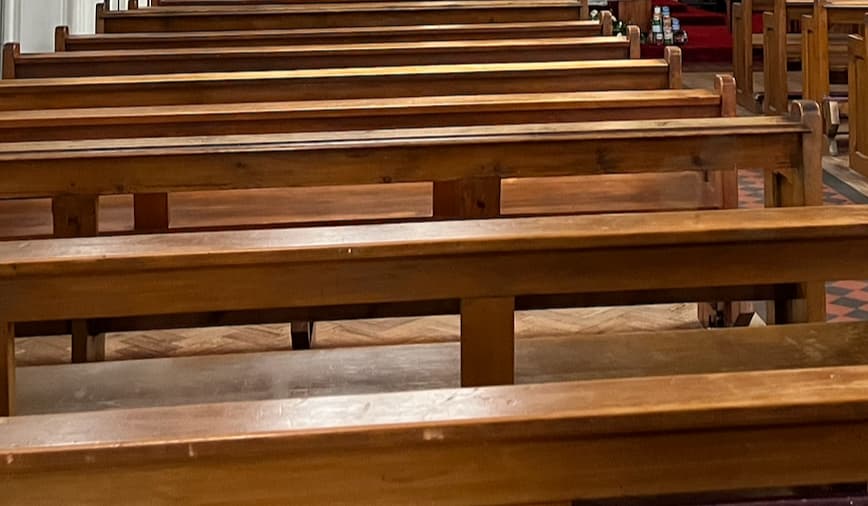
He doesn’t attend mass in a way that suggests he’s catholic. He’s more cautious than Christian. But he’ll make his way to a front row in one of the side aisles, and sit quietly.
He was there today, mostly unseen. Until the prayers to the Blessed Virgin Mary. That’s when he got up from his chair, walked passed Canon P as he bowed in front of the altar, having just recited the Salve Regina.
The man in the row behind me gasped. A woman opposite tutted. Even Canon P glanced back at the homeless man on his way to the Sacristy. I made my awkward face.
I hate to see people embarrassed for their failings, or for their ignorance. And I’ll take a passive approach rather than point out when someone goes wrong.
But this can feel like false virtue. Eagerness to avoid being judgemental can leave us unable to acknowledge right from wrong. It turns into passivity, and a drift towards relativism.
It’s hard to believe the homeless man didn’t know how disrespectful it was to trample on a mass not yet finished.
I’d winced at the brazen disrespect, but also the betrayal of people and a place that had accepted him when he needed help.
I think about Dorothy Day, the founder of the Catholic Worker, who looked after thousands of people in need in New York City over several decades.
She was blunt about what it means to help people.
“There are two things you should know about the poor: they tend to smell, and they are ungrateful.”
Day had a sharp sense of humour, but was adamant you can only help the person in front of you, as they are. That person will be complicated, and messy, and not how you would like them to be. Nor will they care. But you’ll get a lesson in humility, and a reminder of the corporal works of mercy.
I thought about what Canon P might say to the homeless man, and I imagined it would involve a gentle reminder of proper decorum during Mass. Then I thought what the man behind me might have said. Sharper for sure, and probably less forgiving.
And then wondered what I would have said.